

Corporate social investment (CSI) is under increasing scrutiny as stakeholders look beyond claims of social impact to the actions that support them. In this environment, effective communication is no longer a nice-to-have but a strategic necessity.
In July – Mandela Month – Trialogue held a webinar to explore how companies can communicate CSI authentically, integrate social impact into their broader brand narrative, build trust with stakeholders, and strengthen employee engagement.
The panellists were Andra Nel (People, Purpose and Culture Director, KFC Africa), Gabriella Makonese (Head: Social Impact Portfolio Management, Nedbank), Bogosi Motshegwa (Founder and CEO of Thinkemeur) and Andy Du Plessis (Managing Director, FoodForward SA). The webinar was moderated by Trialogue’s Thought Leadership Manager, Sheldon Morais.
CSI communications: the South African context
Trialogue research published in the Trialogue Business in Society Handbook 2025 indicates that, for more than a third of companies, CSI communication was the responsibility of the corporate communications department (39%) or marketing department (35%). For about a quarter (24%) of companies, CSI communication was managed by the CSI department.

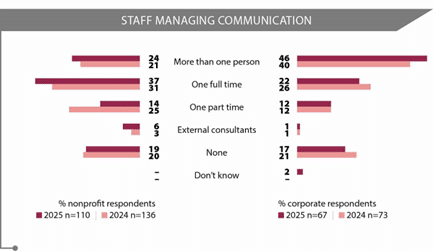
- 78% of companies indicated that the communication budget comes from another department or that there is no separate budget.
- 80% of nonprofits allocated 5% or less of their budgets to communication in 2025, with more than half not allocating any budget to communication.
- Social media was the most common channel for both CSI and nonprofit communications in 2025.
- The use of company sustainability reports increased from 67% in 2024 to 79% in 2025, while use of the intranet increased from 64% to 76% over the same period.
Communicating impact
A snap poll conducted at the beginning of the webinar found that 45% of webinar attendees believe their organisations’ communications accurately reflect their social impact work. In comparison, the remaining 55% felt their organisations either communicate their impact poorly, do not communicate it at all, or may overstate it.

The panellists then outlined their approach to communicating their CSI work, agreeing that social impact is more effective when embedded in an organisation’s purpose, aligned with business objectives, and communicated consistently to stakeholders.
Nel explained that running the second-largest feeding programme in South Africa, Add Hope, embeds a sense of purpose within KFC – and that CSI work should never be “an add-on and an optional element” for brands.
While profit is important to the company, what is even more important is the fact that each new KFC opened employs around 35 people, with 100 new jobs created across the supply chain.
Community is at the heart of KFC’s work, and since “businesses cannot succeed in communities that fail”, the company ensures that programmes such as Add Hope and Mini Cricket are “alive in every community we operate in”.
Every R2 donated by a KFC customer is matched by KFC, and customers can now see in real time where their donation goes. “This is a practical example of “how purpose gets brought to life,” said Nel, adding that the work isn’t done for public relations but to make a real difference – something every new KFC employee understands when joining the company.
Motshegwa noted that social impact is non-negotiable and companies only motivated by profit in a country like South Africa are acting irresponsibly. His company, Thinkerneur Sustainable Impact, shifts perspectives so that social impact and profitability are viewed as two sides of the same coin. He cited two examples of companies getting this right – Tomy Shoes, which gives a pair of shoes to a deserving individual for every pair purchased, and Sappi, whose factory was protected by the community itself during the violent protests that took place in July 2021.
Makonese said social impact at Nedbank is not a separate philanthropy function but an expression of the bank’s purpose and how it engages with employees, stakeholders and communities. Credibility starts with strong, measurable impact, which Nedbank has embedded in its green economy and social impact strategy to build resilient communities and create sustainable livelihoods.
She stressed that internal alignment is the foundation of external credibility, with impact work across the organisation connected through a shared purpose. Nedbank increasingly focuses on communicating scalable platforms rather than individual projects, emphasising lasting outcomes that extend beyond a funding cycle.
Marketing is a crucial fundraising tool and a digital ambassador for nonprofits, said Du Plessis, adding that a return on investment is usually achieved. Small nonprofits with limited budgets should think creatively, for example securing support from PR agencies through CSI partnerships.
“We can’t operate in the nonprofit sector without being in the digital environment, and marketing and communications are important – not only to tell people about the work you do, but also work that you do with your partners,” Du Plessis said, stressing the importance of shared value.
FoodForward SA maintains strong stakeholder relationships through regular impact reporting and engagement opportunities, including an annual stakeholder breakfast where supporters are thanked personally, impact is shared, and future priorities are discussed.
Putting people before the story
Panellists cautioned against prioritising communications over impact. Motshegwa argued that the most important stakeholder is always the beneficiary, and that organisations should focus their investment on creating meaningful change rather than building narratives around incomplete work. In his view, storytelling should reflect impact achieved rather than activity undertaken.
Nel agreed that communications should be “the cherry on top” rather than the main focus. With consumers having access to more information than ever before, organisations that rely on “smoke-and-mirrors” storytelling are increasingly likely to be challenged. Instead, communications should support genuine objectives, whether that is demonstrating impact, creating jobs or highlighting employee development. When stakeholders can see tangible results, organisations can tell a more credible and compelling story.
The discussion also focused on the growing demand for evidence of impact. Du Plessis said corporate partners increasingly want clear reporting that demonstrates the value created through their CSI investments and enables them to show boards what impact their funding is having.
FoodForward SA measures indicators such as cost per meal and operational efficiency, while also partnering with academic institutions to strengthen its evidence base. The aim is to demonstrate measurable social return on investment and communicate those outcomes effectively to partners and stakeholders.
Connecting CSI to business strategy
Asked how organisations can better integrate CSI with broader business objectives, Nel said social investment should reinforce what a company is ultimately trying to achieve. Initiatives such as scholarships, skills development and community programmes can help create the conditions businesses need to operate successfully in the future, making CSI a strategic investment rather than a standalone activity.
Makonese noted that social impact sits within Nedbank’s marketing cluster because it is viewed as a core expression of the bank’s purpose. She emphasised that organisations need systems, processes and measurement frameworks that demonstrate both community value and business value. This includes enabling employees to engage with social causes, supporting social enterprises and strengthening broader ecosystems rather than focusing only on individual projects.
Clear, consistent stakeholder engagement
The speakers all stressed the importance of strategic focus. Motshegwa argued that organisations need clarity about both what they want to achieve and what they should not pursue. Rather than attempting to reach everyone, organisations should prioritise key stakeholder groups, understand what they want those audiences to know, and communicate consistently over time.
Du Plessis echoed this view, noting that many nonprofits spread themselves too thinly across multiple social media channels. Instead, organisations should identify their core audience, focus on the platforms they can manage well and build from there. He also encouraged nonprofits to participate in networks and partnerships that provide opportunities for learning and collaboration.
Bringing employees along on the journey
The final discussion focused on internal engagement.
Makonese said organisations need to be intentional about helping employees understand their purpose and impact goals. At Nedbank, this includes volunteering opportunities, payroll giving and initiatives that enable employees to support communities and social enterprises.
Nel said KFC embeds social impact into its employee value proposition from the start. Employees are encouraged to support Add Hope through fundraising drives, community initiatives and direct involvement with beneficiary organisations. Staff are also encouraged to apply their professional skills to strengthen programme delivery, while suppliers contribute through donations and partnerships. This helps employees feel they are part of the solution and reinforces the idea that social impact is simply part of “how you do business”.
Final advice from the panel
Asked for their one piece of advice, the panellists returned to a common theme: focus on impact, authenticity and shared value.
Du Plessis encouraged nonprofits to better understand the needs and priorities of corporate partners and to demonstrate how their work creates value for both beneficiaries and funders.
Makonese emphasised the importance of authentic storytelling supported by credible data, arguing that strong evidence is essential for building trust and demonstrating impact.
Nel urged organisations to leverage the credibility of their partners rather than relying solely on their own communications. Purpose and impact should be embedded in existing channels and activities, she said, rather than treated as a separate communications exercise requiring additional resources.
Motshegwa cautioned against confusing good storytelling with meaningful impact. While many organisations invest heavily in crafting compelling narratives, he argued that what ultimately matters is the innovation, transformation and positive change being achieved. “We don’t need more awareness,” he said. “We need innovative solutions.”
Watch the full webinar for additional insights.
Find out more
- Read more about Sappi Khulisa, the winner of the Trialogue Strategic CSI Award in 2023.
- Learn more about the Trialogue Strategic CSI Award.
