

Corporate responses to gender-based violence often fall short of the scale and complexity of the crisis. The FirstRand Empowerment Foundation (FREF) takes a different approach – one grounded in strategy, partnerships and measurable impact.
In South Africa, gender-based violence is not only a social crisis; it is a structural one, rooted in inequality, institutional failures, and the systems that shape how communities function.
Addressing it requires more than awareness campaigns or symbolic gestures. It demands strategic thinking, measurable outcomes and partnerships between organisations doing the vital work on the ground.
This is the philosophy that drives the FirstRand Empowerment Foundation’s (FREF) approach to combating gender-based violence and femicide. The FREF’s definition of success is deliberately specific in this regard, striving for “tangible results from interventions that culminate in verifiable changes – both short-term and long-term – through behavioural or attitudinal change of perpetrators, survivors and beneficiaries, leading to improved situations for survivors and communities, and their access to services, institutional and other reforms”.
This definition serves as the north star for the Foundation’s GBVF efforts, guiding every investment decision, partnership and intervention. It demands accountability, requires evidence, and rejects approaches that prioritise visibility over impact. The approach is underpinned by a strategic framework aligned with South Africa’s National Strategic Plan on GBV, which is built on three carefully selected pillars:
- Prevention and building social cohesion. This tackles GBV at its source by addressing root causes. The Foundation supports community-based organisations deeply entrenched in the communities they serve, enabling them to challenge the social and cultural norms that allow GBV to persist.
- Economic power. This pillar recognises that financial independence is often the difference between leaving a dangerous situation and being trapped in it. The FREF supports initiatives that empower women through access to education, training, work and entrepreneurship – pathways to long-term economic independence that break cycles of violence.
- Research and information management. This pillar ensures interventions are grounded in evidence. Proper research on gender-based violence leads to a better understanding, more effective prevention and successful prosecution of perpetrators.
These pillars work together to create a comprehensive approach that addresses immediate safety needs while tackling systemic causes.
Strategy in action
The FREF’s strategy acknowledges the fundamental reality that corporations can’t solve GBV alone. Effective solutions require organisations that have earned community trust, developed innovative approaches, and demonstrated measurable impact. The FREF’s role is therefore to identify and partner with these organisations to amplify their work through strategic investment.
But strategy on paper is one thing. Strategy in practice requires translating frameworks into actions people can understand and support. A recent example of the FREF’s ability to do this took the form of a two-day initiative with FNB staff that exemplified how the GBVF pillars, partnerships, and definition of success work together.
On 5 November, FREF hosted a webinar titled ‘Let’s Talk About GBV – Understanding, Awareness, and Action’. Led by Employee Wellbeing Specialists Nombuso Kunene and Claire Kelty, the webinar provided crucial context about how GBV manifests in South African society and why addressing it is everyone’s responsibility.

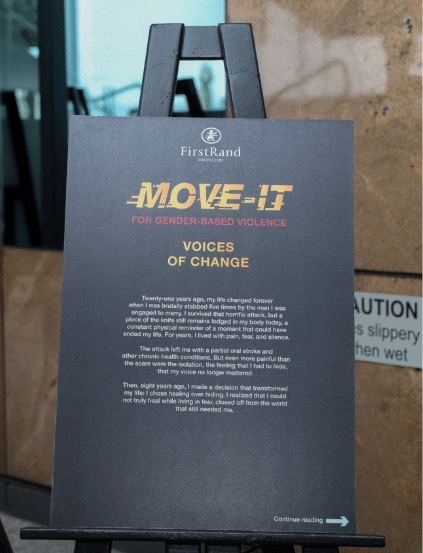
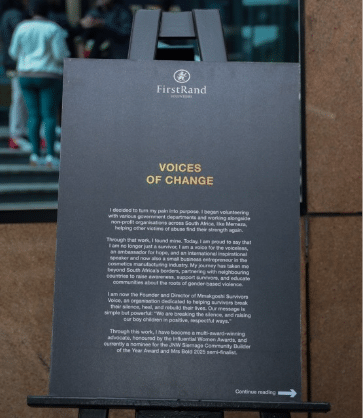
The following day, that awareness was translated into action through the GBVF Move IT Challenge, which brought nearly 350 employees together at FirstRand’s Johannesburg campus.
More than a wellness initiative, the event served as a practical demonstration of how FREF’s strategy comes to life through partnerships with organisations driving measurable impact. Partners such as Memeza and the GBVF Response Fund were present to demonstrate to employees how targeted investment drives real-world change.
Move-It itself is designed to bridge intention and action. As an internal FirstRand initiative, it channels everyday activity into social impact: for every 30 minutes of movement logged, the organisation donates R30 to a supported cause.
During the 16 Days of Activism campaign, this model linked employee participation directly to initiatives working to advance safety, dignity and equality, turning individual effort into collective impact.
Dr Thuli Mthethwa and the Memeza team demonstrated the Prevention and Justice pillars in action. They showed how their technology-based community safety solutions – panic alarm systems and digital safety networks – are bridging the critical gap between underserved communities and SAPS responders, creating tangible safety outcomes in vulnerable areas.
Ms Koketso Rathumba from the GBVF Response Fund brought scale into focus. The Fund has supported over 235 grassroots organisations and benefited more than 950 000 individuals through interventions spanning prevention, care and empowerment.

Both these organisations represent the GBVF pillar approach at work with community-based entities driving behavioural change, institutional reform and improved outcomes for survivors, thereby multiplying impact beyond what any single entity could achieve.
According to Kone Gugushe, Head of the FirstRand Foundation, this is how corporate investment in social justice becomes meaningful – not through isolated events or symbolic gestures, but through strategic frameworks, clear definitions of success, and partnerships that turn resources into results.
“The FirstRand Empowerment Foundation’s approach to GBVF demonstrates what becomes possible when strategy meets partnership, resources meet impact, and when everyone involved understands exactly what success looks like and how to achieve it.”
