

At Katlehong Engineering School, unreliable power was undermining technical education – until a targeted intervention by the FirstRand Empowerment Foundation (FREF) changed the equation.
In a township where 37% of people can’t find work, Katlehong Engineering School of Specialisation represents something truly valuable – a pathway to opportunity. But that opportunity was under constant threat from a challenge many no longer face – simply keeping the lights on.
Imagine trying to learn welding when the power cuts out mid-lesson, or completing a technical project without knowing whether the equipment will work the next day. For the school’s 1 540 students, outages were more than just disruptive – they were eroding valuable learning time.
That changed on 1 August 2025, when FREF handed over a solar photovoltaic system designed to ensure uninterrupted power for teaching and learning.
“When we invest in schools like Katlehong, we are not only protecting education from the disruptions caused by lingering energy insecurity,” says Dr Nolulamo Gwagwa, Chairperson of the FirstRand Empowerment Foundation.
“We are also showing that climate-smart solutions can be a tool for equality and inclusion, giving children in disadvantaged communities the same chance to learn and succeed as everyone else.”
More than just a school
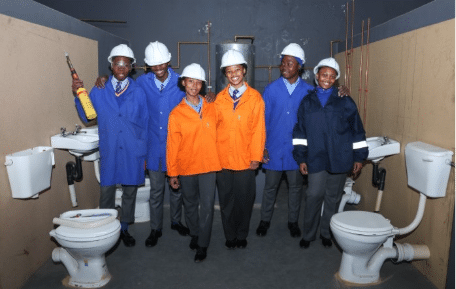
Katlehong Engineering School serves a community in Ekurhuleni where 26% of residents live below the poverty line. Unlike traditional high schools, it focuses on technical, vocational and artisanal training – practical skills that can lead directly to employment.
For many of the 780 female and 760 male students, the school provides a lifeline, playing a catalytic role in the community, and bringing hope along with the real possibility of breaking the cycle of unemployment and poverty.
That mandate comes with high energy demands. Workshops depend on machinery that cannot function without reliable electricity, making the school particularly vulnerable to outages and infrastructure failures.
Recognising the severe impact of this energy insecurity challenge, FREF commissioned Knowledge Pele, a leading social research firm focused on energy communities, to assess the school’s needs. Their evaluation revealed that while the school’s infrastructure met Department of Basic Education standards, the existing 25kVA transformer was undersized, and power resilience was virtually non-existent.
The solution, designed by Knowledge Pele and funded by FREF, involved upgrading the transformer to 50kVA, fixing existing infrastructure issues and installing a solar PV system with battery backup. The specifications and costs were substantial, with a 100kVA inverter and 150kWh of battery storage providing more than enough reliable electricity to meet all the school’s energy needs.
Strategic alignment with FREF’s purpose
This intervention reflects FREF’s wider mandate as a Public Benefit Organisation – to reduce poverty and inequality through strategic social investment, with a strong emphasis on education for disadvantaged South Africans. The Katlehong project addressed two key areas in particular: quality education and a climate change response.
The educational impact is immediate in the form of uninterrupted technical training that enables learners at the school to develop employable skills. The climate change response and environmental benefits are equally significant, shifting the school from carbon-intensive grid electricity to clean, renewable energy while also ensuring the stability of its energy supply.
Given that the Katlehong Engineering School student body is 100% African and majority female, this project represents exactly the kind of targeted empowerment that FREF was designed to support.
Dr Nolulamo Gwagwa, Chairperson of the FirstRand Empowerment Foundation, emphasises the broader significance: “When we invest in schools like Katlehong, we are not only protecting education from the disruptions caused by lingering energy insecurity,” she explains. “We are also showing that climate-smart solutions can be a tool for equality and inclusion, giving children in disadvantaged communities the same chance to learn and succeed as everyone else.”
Transformation in practice
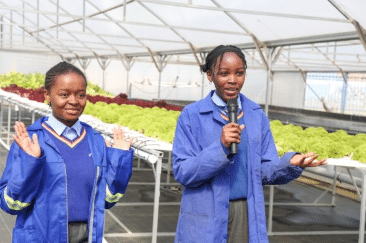
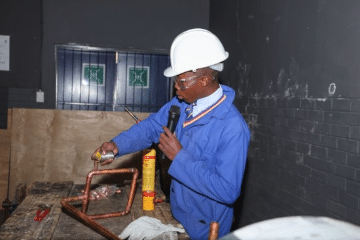
The August handover offered a glimpse of what that investment looks like on the ground. Visitors saw students working uninterrupted on technical projects – something that had previously not been guaranteed.
The event also highlighted the school’s broader ecosystem. Guests received fresh eggs from the school’s on-site chicken farm, a small enterprise that supplements income while giving students hands-on business experience.
“This project represents much more than a solution for a single school’s energy problems,” says Dr Gwagwa, “It’s a proof of concept that demonstrates how solar power can secure technical education while reducing environmental impact.
“Possibly most importantly, it’s a model of systemic solutions that unlock long-term opportunities that can be replicated at other specialised schools and public institutions across South Africa. Our hope is that Katlehong becomes a catalyst for broader partnerships, encouraging more investment in schools of specialisation and more innovation in the fight against climate change.”
Powering better futures
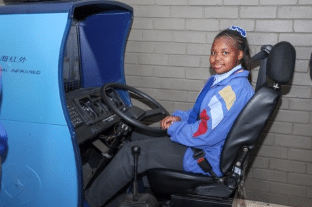
For students, the impact is immediate: the ability to work, learn and complete projects without disruption. For their families and communities, the benefits will emerge over time as graduates enter the workforce or start businesses.
“This Katlehong initiative embodies the FirstRand Empowerment Foundation’s philosophy that shared prosperity requires intentional action,” Dr Gwagwa emphasises. “By mobilising resources, leveraging partnerships and aligning strategy with social impact, it bridges the gap between education and sustainability, and between immediate short-term relief and lifelong empowerment.”
