
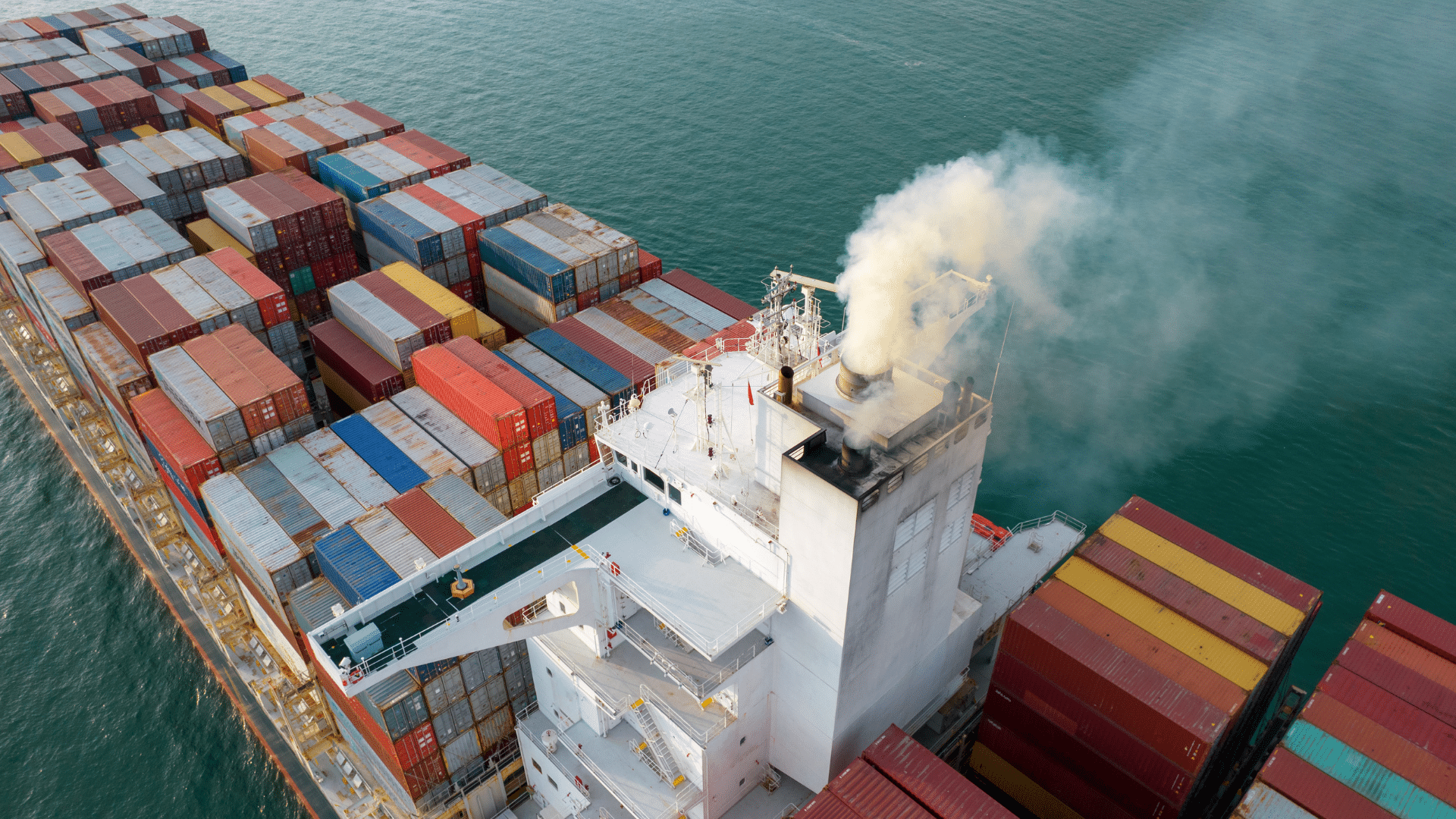
Climate policy is now shaping trade. Europe is effectively charging for carbon built into imported goods, which means South African exports carry an added cost because of the country’s coal-heavy grid. The issue is no longer about sustainability as a principle but about remaining competitive: decarbonise, or risk losing access to key markets. Those that move early can limit costs and hold their ground, while those that delay will gradually lose market share.
A Carbon Border Adjustment Mechanism (CBAM) effectively extends a country’s carbon rules to imports, placing a price on the emissions embedded in goods and aligning them with what domestic producers would have paid. The aim is to prevent companies from shifting high-emissions production to weaker regulatory environments and exporting those goods back into stricter markets.
In practice, CBAM works by requiring importers to buy certificates linked to the emissions embedded in their goods, so cleaner production is associated with lower costs. For exporters, this shifts the focus beyond factory efficiency alone to the carbon intensity of the broader production environment, including the energy mix of the country in which they operate.
Two regimes, two timelines: Costs are felt in the EU, with the UK next
The two CBAM regimes are often confused, which leads to a misreading of risk. In the European Union (EU), there was a reporting-only phase from October 2023 to the end of 2025, but from 1 January 2026, CBAM costs began applying to covered EU imports, with importers required to declare embedded emissions and surrender the relevant certificates annually. The UK’s version will only come into effect on 1 January 2027.
The distinction is important, however. For now, South African exports to the UK incur no CBAM costs, so the figures provide a baseline for future exposure. In Europe, exporters are already facing real costs. While both systems included a reporting period, they differ in when those costs begin to apply.
| Oct 2023 | EU transitional phase opens Importers report embedded emissions only. No certificates, no payments. |
| 1 Jan 2026 | EU definitive phase begins. COST NOW Certificate purchase and surrender obligations apply to covered imports above 50 tonnes. |
| 1 Jan 2027 | UK CBAM commences EXPOSURE AHEAD Five sectors covered. £50,000 import threshold. No country exemptions, including none for the UK’s own trading partners. |
| 1 Jan 2028 | EU downstream expansion (proposed) PROPOSED ~180 steel- and aluminium-intensive finished goods would enter scope, if the proposal clears the EU legislative process. |
The covered sectors: Six commodities, but only two that South Africa ships in volume
Both regimes target carbon-intensive, trade-exposed sectors. The EU currently covers six: iron and steel, aluminium, cement, fertiliser, electricity and hydrogen. The UK covers the same set, except for electricity. For South Africa, almost all of the risk sits in just two: iron and steel and aluminium.
| 5% of all SA exports to the EU are CBAM-covered goods (≈ €1.1bn, 2023) | ~0.8% of South African GDP exposed to the mechanism | 80%+ of SA’s electricity is coal-fired, embedded in every export |
Iron and steel: The largest exposure by value and the most volatile
South Africa’s iron and steel exports were worth about US$6.58 billion in 2022, but have since declined as global prices softened and local constraints reduced production and exports. Persistent logistics problems (including Transnet rail and port disruptions) and load-shedding have limited how much can be shipped.
A major concern is exposure to Europe. Around 16% of South Africa’s iron and steel exports are at risk under CBAM, and the sector is heavily reliant on European markets. In March 2023, 59% of primary steel exports went to EU countries, with a further 6% going to the UK.
However, exports to Europe have been highly volatile. SARS data show that the value of steel exports to the EU dropped sharply – from R1.48 billion in January 2022 to R228 million in January 2025. CBAM will add a carbon cost to exports at a time when the sector is already under strain and highly sensitive to price changes.
According to the International Trade Administration Commission (ITAC), the sector is facing multiple pressures at once: global oversupply of steel, rising imports of cheaper products (particularly from China and India), and trade diversions as other countries raise tariffs. These challenges are compounded by weak domestic demand, high energy and logistics costs and trade-related abuses, such as customs fraud, under-invoicing and tariff circumvention.
Aluminium: Smaller sector, but highest carbon exposure
Aluminium exports are smaller than steel by value, but they face a higher carbon penalty under CBAM. South Africa exported just under R40 billion worth of aluminium in 2025, with roughly a quarter of this exposed. By volume, South Africa is the EU’s eighth-largest supplier.
The issue is not inefficiency.
Hillside Aluminium in Richards Bay – the country’s only primary smelter and the largest in the southern hemisphere – operates with a carbon intensity of around 18 tonnes of CO₂e per tonne of aluminium. The global average is closer to 10. This gap is driven almost entirely by coal-based electricity, not by the smelting process itself.
This carbon intensity is evident in trade terms. South African aluminium carries about 0.32 kgCO₂e per dollar of exports, compared to around 0.07 in the EU – roughly 4.5 times higher. As a result, aluminium will bear a disproportionately large share of CBAM costs, despite being a smaller export sector.
Simply put, even an efficient South African smelter produces more carbon-heavy aluminium than its global peers, because of the grid it relies on.
The Eskom factor
At the core of this issue is South Africa’s electricity mix. More than 80% of power comes from coal, so exporters inherit a high carbon footprint regardless of how efficiently they operate. CBAM effectively prices this into their products.
The EU is already considering changes that would place even greater weight on indirect emissions from electricity use. This would directly affect exporters connected to Eskom’s grid, regardless of their own operational performance.
Sector by sector, where the risk actually sits
Overall, about 10% of South Africa’s exports to the EU fall within CBAM’s scope, equivalent to roughly 0.8% of GDP. Continent-wide modelling suggests the impact could be significant: African aluminium exports could fall by around 14%, with iron and steel also materially affected. Across the continent, GDP losses could be in the region of 0.9%.
Other sectors, such as cement and fertilisers, are covered by CBAM, but South Africa exports relatively small volumes of these products to Europe. The real exposure lies in metals.
| SECTOR | SA EXPORTS (WORLD) | EU SHARE AT RISK | CARBON INTENSITY VS EU | TIMING |
| Iron and steel | ~$6.58bn (2022) | ~16% | 0.91 vs 0.16 kg/$ | EU Jan 2026 |
| Aluminium | ~$2.25bn (2023) | ~25% | 0.32 vs 0.07 kg/$ Hillside ~18 vs ~10 t/t | EU Jan 2026 |
| Cement and fertilisers | Small | Minor | — | EU Jan 2026 |
| UK (all covered) | Part of ~$13bn total goods (2024) | — | Same intensities | UK Jan 2027 |
The real impact lands in 2026
There is a nuance that complicates the story.
During CBAM’s transitional phase, the EU applied default emissions values to South African exports that were actually lower than the true carbon intensity of local production. In effect, this gave South African companies a temporary advantage.
That is changing in 2026. The definitive system introduces country-specific default values with an added mark-up, meaning the cost increase will not be gradual. Instead, exporters are likely to face a sharp jump in costs at the start of the new phase.
CBAM expands into manufacturing
In December 2025, the European Commission proposed extending CBAM beyond raw materials, adding around 180 downstream product categories that rely heavily on steel or aluminium. These include machinery, fabricated metal products, vehicle components, white goods, construction and electrical equipment.
If adopted, the new rules would take effect from 1 January 2028 and bring an estimated 7 500 new importers into scope.
The rationale is that, without this extension, European manufacturers of finished goods could be undercut by imports made from carbon-intensive materials. Under the proposal, only the emissions embedded in the inputs would be counted – for example, the steel in a car door, not the manufacturing process itself.
For South Africa, this is significant. The country already exports a range of these downstream products to the EU, meaning CBAM would increasingly affect not just raw materials but finished goods as well. In other words, it moves from the mine and smelter into the factory.
What companies should do
The most important strategic point is that CBAM allows exporters to deduct a domestic carbon price from what they owe at the EU border. South Africa’s carbon tax can therefore reduce this liability. This makes CBAM not just a compliance issue but a question of competitiveness.
Companies need to:
- Measure and verify emissions now. Default values are conservative. Companies that can provide audited, product-level data are likely to face lower costs than those relying on generic estimates.
- Reduce emissions where possible. Investing in renewable energy and cleaner processes lowers the carbon footprint of products and, therefore, the CBAM charge. The cleaner the electricity behind the product, the lower the cost.
- Engage on the domestic carbon price. A credible, recognised South African carbon price can be offset against CBAM. This keeps revenue within the country rather than paying it at the EU border.
- See CBAM as part of a broader shift. Other EU measures – such as the deforestation rules (EUDR) and supply-chain due diligence – are based on similar principles and are likely to follow suit.
Contact: Tina Playne
